


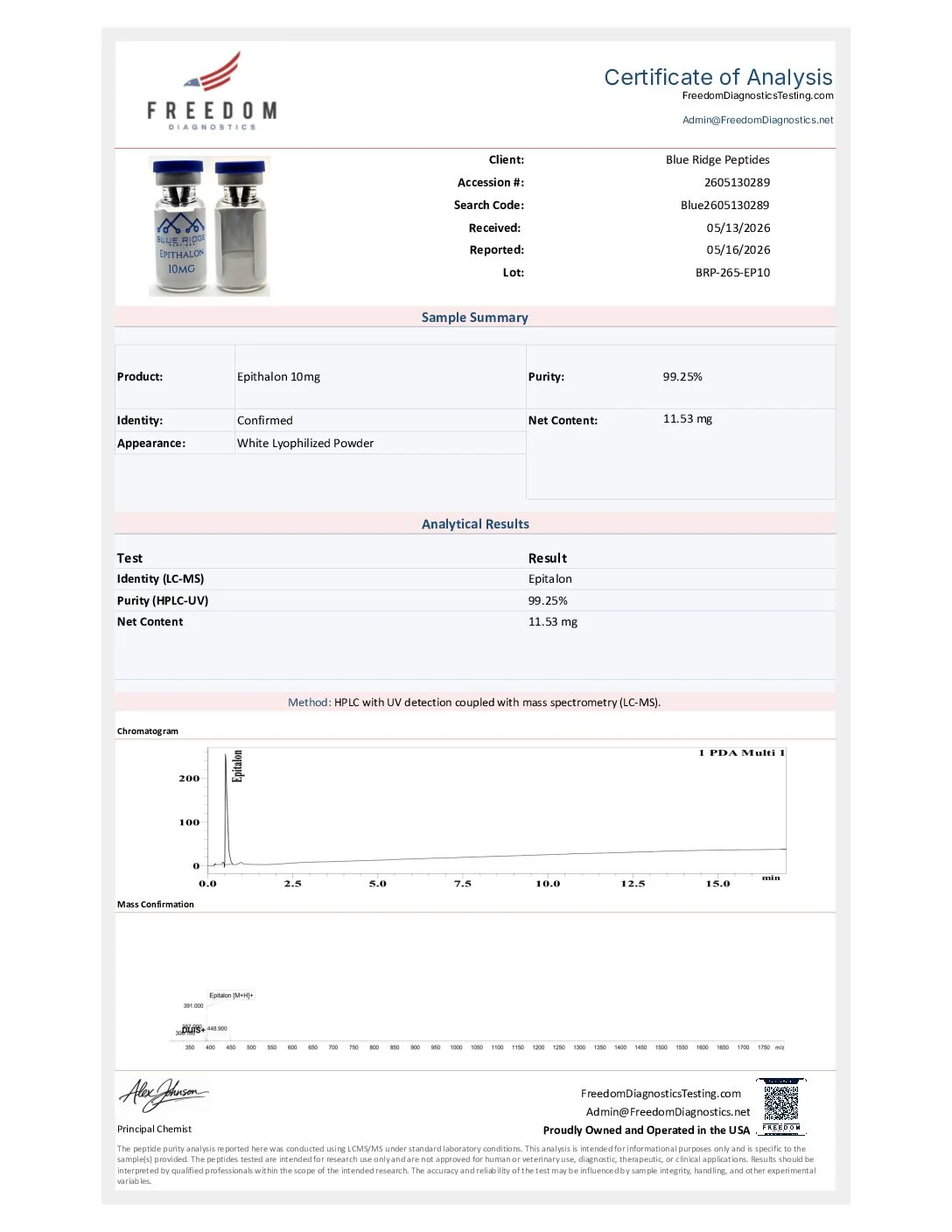
Epithalon – Research Grade Peptide
Epithalon is a synthetic peptide studied in research settings for its role in cellular aging, circadian rhythm regulation, and telomere biology. Preclinical research has examined its influence on telomerase-related activity and gene expression associated with cellular longevity and repair processes.
Additional investigations have explored Epithalon’s interaction with neuroendocrine pathways involved in sleep–wake cycles and hormonal signaling. These research models have contributed to interest in Epithalon as a tool compound for studying biological timing mechanisms and age-related cellular regulation.
Ongoing scientific studies continue to examine the molecular mechanisms underlying Epithalon’s activity and its potential relevance in aging research, cellular biology, and longevity-focused experimental frameworks. All observations referenced are derived from controlled, non-clinical research environments.
Blue Ridge Peptides supplies Epithalon strictly for laboratory research, analytical testing, and in-vitro scientific investigation. This material is not intended for human or animal use and is not approved for therapeutic or diagnostic applications.
For research use only. Not for human or animal consumption.
Research Overview
Epithalon is primarily studied in experimental models focused on cellular aging, genetic regulation, and circadian rhythm biology. Research literature describes its investigation in relation to telomere maintenance processes, gene expression modulation, and neuroendocrine signaling under controlled laboratory conditions.
Key Research Focus Areas
- Cellular Aging Research: Examined for its role in age-related cellular regulation and longevity-associated pathways.
- Telomere Biology Studies: Investigated for its interaction with mechanisms related to telomere maintenance and cellular replication limits.
- Circadian Rhythm Regulation: Studied for its influence on biological timing systems and sleep–wake cycle signaling.
- Gene Expression Analysis: Utilized in research exploring regulatory effects on genes associated with cellular repair and longevity.
- Neuroendocrine Pathway Research: Examined for its interaction with hormonal and neurological signaling systems.
Because Epithalon is studied for regulatory and signaling functions rather than direct therapeutic effects, it is commonly used as a research compound for investigating age-related and circadian biological mechanisms in non-clinical settings.